
The science of materials in our school workshop Material Madness Game Show for KS1 or KS2 takes children on a journey to discover where the everyday items they take for granted come from. While we all think about the next important item we must have, challenging children to think where the plastic in their pens, the cotton (or silk) in their clothes or the metal in their phones actually comes from, never fails to get the children thinking and responding with some great answers. For example, our presenters have been told that silk comes from a cow, a pig, flowers; metal from people, the moon, wood! The material however, that elicits the best response is rubber. The look of amazement to incredulity can be seen on most children and some teachers faces. So here are some interesting facts about this extraordinary natural material.
Rubber Facts:
- The first use of rubber was by the indigenous cultures of Mesoamerica e.g. Mexico, Belize, Honduras as incredibly early as approx. 7000BC.
- Natural rubber is a sticky, milky substance called latex, the majority of which comes from the Hevea brasiliensis tree.
- Rubber is harvested by a process called ‘tapping’. This is where a wide V-shaped cut is made in the tree’s bark, which allows the latex to drip out and is collected in a cup.
- Sir Henry Wickham in 1876 smuggled thousands of seeds out of Brazil to England. The seeds were grown in Kew Gardens and the seedlings sent to Asia, e.g. Sri Lanka, Malaysia, Singapore, Indonesia, establishing the giant plantations that now supply much of the world’s rubber today and destroying what would have been an Amazon rubber boom.
- Joseph Priestley in 1770 used pieces of rubber to erase marks made by pencil on paper. Yes, you guessed it, the rubber was born.
- 1823 Charles Macintosh invented the rubberized waterproof coat. Don’t forget your mac!
Flower power!
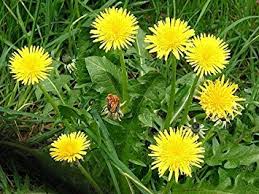
Before we go on, this is a good point to give you an easy experiment. Did you know the milky substance from the dandelion flower (weeds to gardeners) is latex? To make a piece of fabric waterproof , spread dandelion sap on a piece of cloth and allow it to dry. Once dry pour water onto it, with any luck, water will not seep through. It will be a little sticky though.
Lets continue with our rubber facts…
- There are two types of rubber – natural (latex from plants) and synthetic (chemically produced).
- Now if you have ever watched any formula One racing you will have seen the name Goodyear. This is because in 1839 Charles Goodyear accidentally dropped latex onto a hot stove and created vulcanized rubber. How’s that for a days work! Unfortunately he died poor, but his name lives on. Now I wasn’t going to mention this but this is a good explanation of molecules changing the state of material. Hope you Yr5 and 6’s are listening. Natural rubber molecules are arranged as long chains that are tangled up and only weakly linked together, making it relatively easy to pull apart, this is why latex rubber is stretchy and elastic. When latex is vulcanized (heated) the added sulfur atoms help to form extra bonds between the rubber molecules, which are known as cross-links. These cross-links work a bit like the trusses you see on a bridge, tying the molecules together and making them much harder to pull apart, creating a strong and durable black rubber.
- John Boyd Dunlop another name you’ll see in Formula One invented the pneumatic (air-filled) rubber tyre in 1882. Roll on the rubber tyre as we know it today!
From wellington boots to electrical cables, rubber is an amazingly versatile material. From its humble origins, it has truly become the material we can’t do without.
CREW