

November in America is the month of Thanksgiving, a holiday that commemorates the Pilgrims’ journey to the New World. But long before the Pilgrims set sail from Plymouth, it was Christopher Columbus who brought the Americas to Europe’s attention—a landmass about 7,000+ miles away. Interestingly, the continents are called “America” not because of Columbus but due to another story (which we’ll cover in a future blog). However, if Columbus hadn’t set sail in 1492, history might have been quite different.
Born in 1451, Christopher Columbus was driven by a spirit of adventure shared by many throughout human history. Since ancient times, people have explored new lands, often for food, safety, or better living conditions. As societies settled, developed agriculture, and built towns, exploration evolved from a necessity to a pursuit of knowledge, power, and influence. Civilizations like the Egyptians, Chinese, Romans, Benin, and Mayan established vast empires, but even they couldn’t resist the urge to explore, trade, and learn from other cultures. Over time, exploration became less about survival and more about conquering and expanding influence.
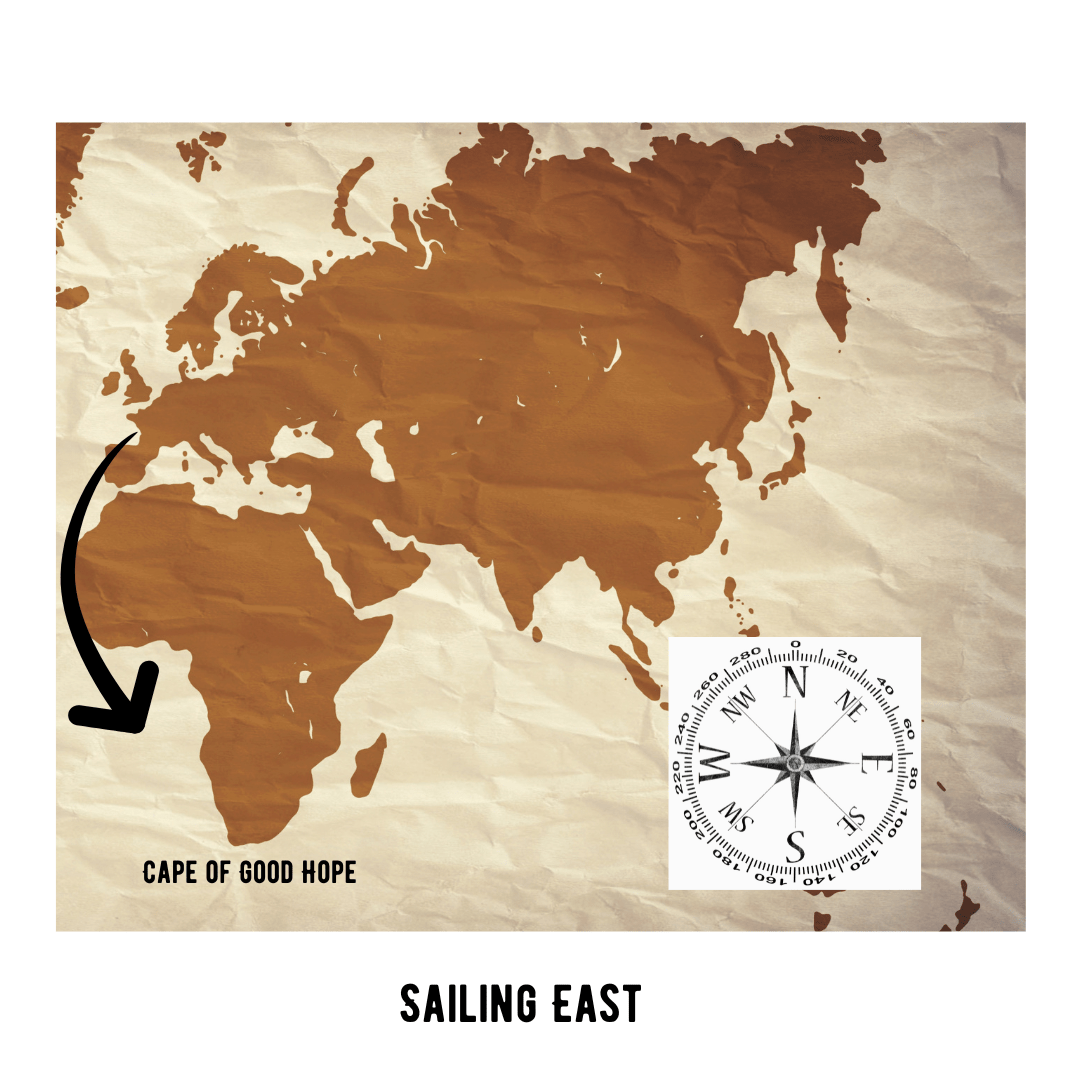 In Columbus’s time, Europeans had been trading with Asia, or the East Indies, for centuries, importing silks, spices, and precious metals. However, the route was arduous, requiring sailors to travel eastward past Africa and around the Cape of Good Hope, a notoriously dangerous passage.
Most sailors navigated close to the coastlines at the time, always keeping the land in their site. The common belief during this period was that the earth was flat, and if you ventured too far, you would fall off its edge.
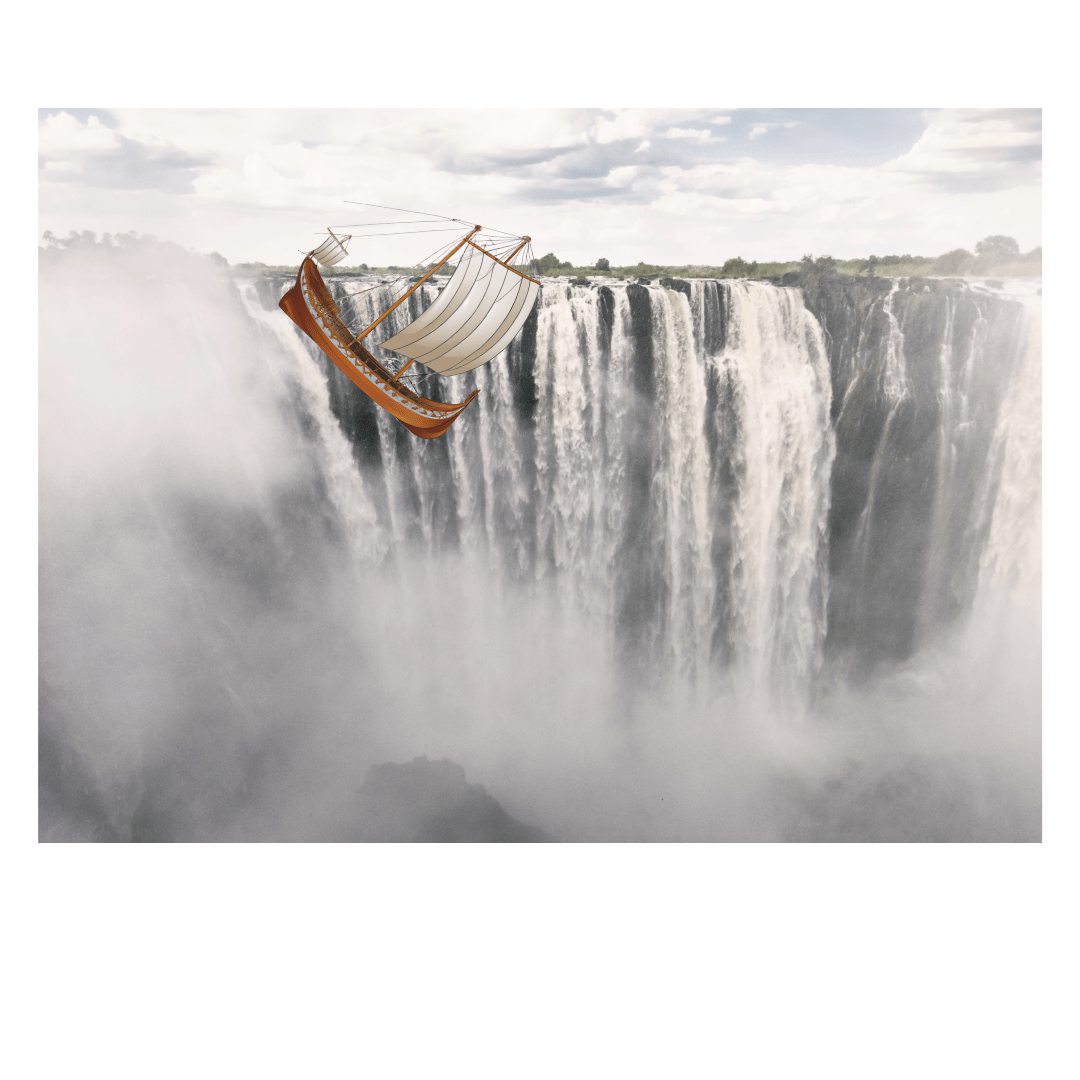
Columbus, however, believed the world was round and calculated that if he travelled west, a route no European had attempted, he would sail around the world and get to Asia (East Indies) from the other side. The only slight problem with his idea is that he thought the world was much smaller.

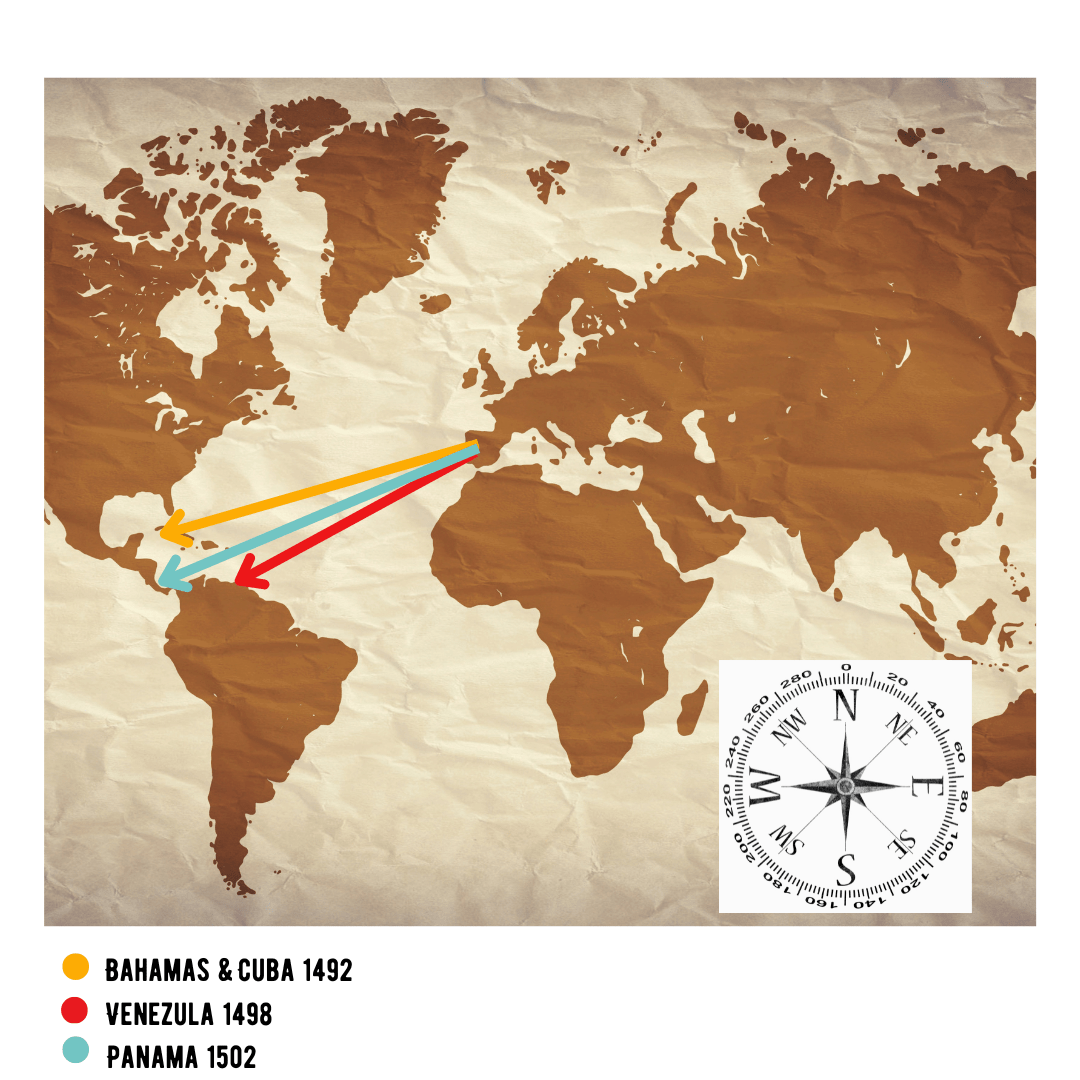
On August 3, 1492, Columbus set sail with three ships: the Santa Maria, the Niña, and the Pinta. After 10 weeks at sea, on October 11, he finally sighted land. Believing he had found a western route to the East Indies, he named the area the West Indies. In reality, he had landed in what is now the Bahamas on an island he called San Salvador and claimed it for Spain, despite it already being inhabited. During the same voyage, he sailed further and thought he had reached Cipangu (Japan); it was, in fact, Cuba.
Columbus made three additional voyages. On his second, in 1498, he arrived at what would become Venezuela. On his third and final journey in 1502, he landed in Panama.
Columbus died in 1506, still believing that he had found a new route to the East Indies. His legacy is complicated. While he opened new lands to European exploration and trade, his expeditions also marked the beginning of a challenging chapter for the native populations of the Americas. Columbus may have been a visionary explorer, but his navigational decisions and the impact of his “discovery” continue to spark debate to this day.
CREW Schools