
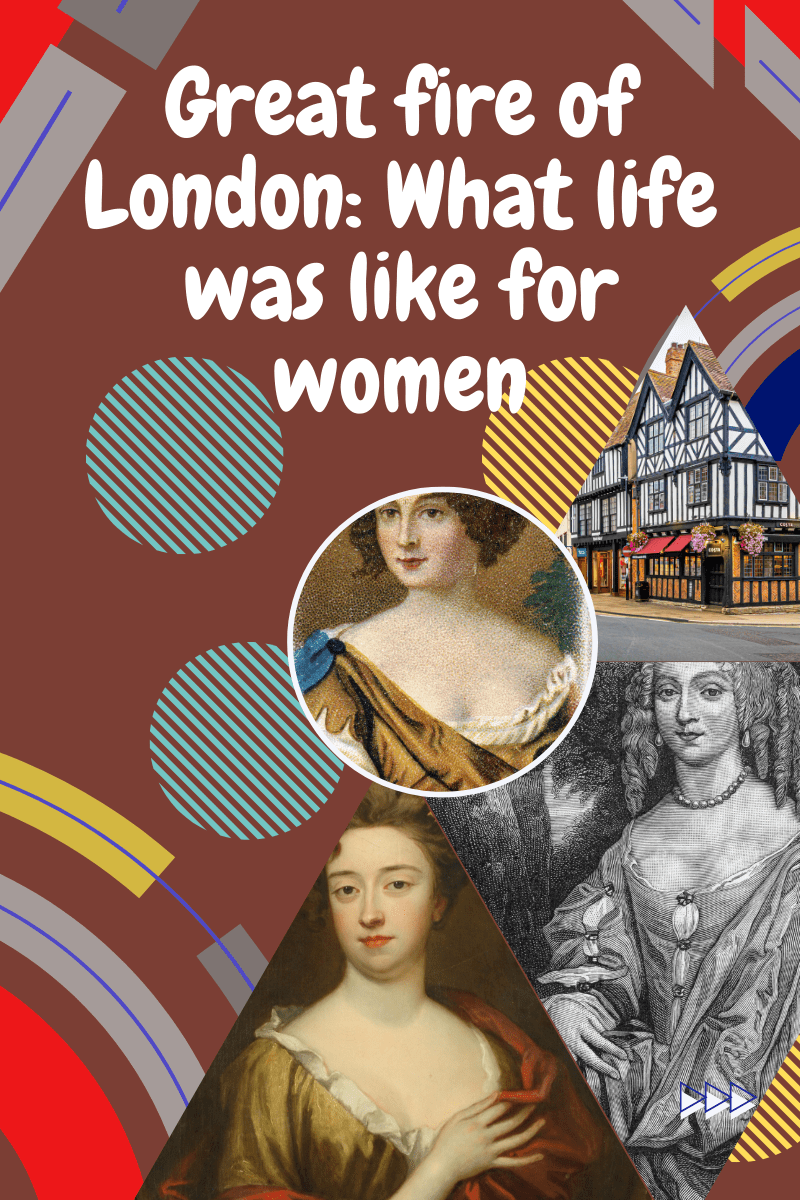
We are all familiar with the diarist Samuel Pepys, a prominent figure in 17th-century England who wrote about The Great Fire of London, but what of his wife, Elizabeth Pepys? Unfortunately, like many women of her time, little is known about her. As little is known about her life independently of Samuel’s diary, we can only piece together fragments of her existence from his writings. Elizabeth became Samuel’s wife shortly before her fifteenth birthday and tragically passed away at the young age of 29. It’s important to acknowledge that Elizabeth would have had her own experiences, thoughts, and feelings, even though they may never have been fully known to us.
At the time of the Great Fire of London, women faced exceptionally challenging circumstances. In a society that viewed them as inferior to men, women worked arduously as weavers, sewers, and housemaids, often with limited freedoms and opportunities for advancement. Shockingly, some women were treated as possessions and in some cases, wives were even sold at public markets, even though this practice was illegal. Furthermore, wealthy women were not immune to exploitation, as they could also be kidnapped and forced into marriages against their will. These are just some examples of women’s hardships and injustices during this period.
However, In the 17th century, women also began to experience newfound freedoms despite facing hardships. For instance, they gained the ability to own businesses, manage household finances, and even participate in stage acting. Below is a brief glimpse into the lives of some notable 17th-century women who made their voices heard. You may or may not be familiar with them, but there were certainly many vocal women during that time.
The Scientist
In the 17th century, Margaret Cavendish, the Duchess of Newcastle-Upon-Tyne (1623–1673), was one of the most prolific female authors, having written 21 books. Among her notable works is “The Blazing World” (1666), considered one of the earliest examples of science fiction. Notably, in 1667, she broke barriers by becoming the first woman to attend a meeting at the Royal Society, founded in 1660. This remarkable achievement stood unmatched for centuries until Kathleen Lonsdale and Marjory Stephenson became the first female scientists to be elected to the fellowship of the Royal Society in 1945.
In his writings, Samuel Pepys harshly criticized Margaret Cavendish, describing her as “mad, conceited and ridiculous” and commenting on her attendance at the Royal Society, stating:
“The Duchesse hath been a good, comely woman; but her dress so antick, and her deportment so ordinary, that I do not like her at all, nor did I hear her say anything that was worth hearing.”
This reflects the prevailing attitudes towards women and their intellectual contributions during that time. Despite these criticisms, Margaret Cavendish boldly disregarded the opinions of men and defiantly published her works under her own name, which was unconventional for women at the time. She even had her image engraved on her publications to assert her authorship. Remarkably, some of her work remains in print today, serving as a testament to her enduring legacy and significant contributions to literature and philosophy.
The Feminist
Mary Astell (1666 – 1731) is widely regarded as the first English feminist. In her influential work, ‘A Serious Proposal to the Ladies and Some Reflections upon Marriage,’ she advocated for the intellectual equality of men and women, championed nurturing female friendships, and criticized prevailing sexist double standards. She controversially argued against the institution of marriage for women, believing it often led to subordination within the marital relationship. Despite some viewing her stance as contradictory, it’s important to recognize the historical context in which Astell wrote, as women’s thoughts and ideas were heavily influenced and controlled by societal norms established by men.
The Inventor
During the 17th century, women took on a wide range of responsibilities, including managing household affairs, preparing food, and tending to the overall well-being of their families. In addition to these duties, many women practised herbal medicine, creating remedies and poultices to address various health issues. In 1637, Amye Everand achieved a significant milestone by becoming the first woman to receive a British patent for her herbal invention, “Mrs Ball’s Tincture of saffron and essence of roses.” This patent recognition underscored women’s valuable contributions to herbal remedies and highlighted their essential role in healthcare during that era.
The Actress
Nell Gwyn’s (1650-1687) story is a remarkable tale of success against all odds in the 17th century. Born into poverty, she started her career selling oranges in The King’s Theatre (now known as Drury Lane). Despite being illiterate due to the lack of educational opportunities for girls at the time, Nell Gwyn’s quick wit, humour, and beauty captured the attention of many, including Samuel Pepys, who fondly described her as ‘pretty, witty Nell.’ John Dryden, the renowned playwright and Poet Laureate appointed by Charles II, frequently wrote roles specifically for her in his plays.
Notably, Nell Gwyn’s relationship with Charles II led to the birth of two sons. Her elder son, Charles Beauclerk, was conferred the title of Duke of St Albans. Nell Gwyn’s journey from humble beginnings to a position of influence is a testament to her remarkable resilience and talent.
Nell Gwyn’s intelligence and humour not only propelled her to become one of the leading comic actresses of her time but also allowed her to navigate the challenges faced by women, particularly those from impoverished backgrounds, in the 17th century.
The Painter
Mary Beale (1633-1699) was a professional female painter who was celebrated for her exceptional talent as a portraitist. Despite the societal challenges faced by women in the arts during her lifetime, Beale managed to provide for her family through her artistic endeavours. Notably, she developed a close friendship with Sir Peter Lely, the renowned court painter to Charles II. Beale had the unique opportunity to observe Lely’s techniques in his studio, an experience that significantly influenced her own artistic style.
During her peak years, Beale was in high demand, securing an impressive 83 commissions, each of which brought her a substantial income. In addition to her prowess as a painter, Beale was also a skilled writer. Inspired by her ‘Painting of Apricots’, she authored a manuscript titled ‘Observations. ‘ This manuscript is considered the earliest known instructional text in English authored by a female painter.
A visit to Tate Britain would enlighten and inspire those interested in seeing some of Beale’s extraordinary work.
Conclusion
Women faced numerous challenges before and after The Great Fire of London. Despite being often depicted as peripheral figures in significant events and societal life, they played integral roles in every aspect, even though their voices were frequently silenced or overlooked. Why not further research some of these notable women and include their stories in your study of this period?