
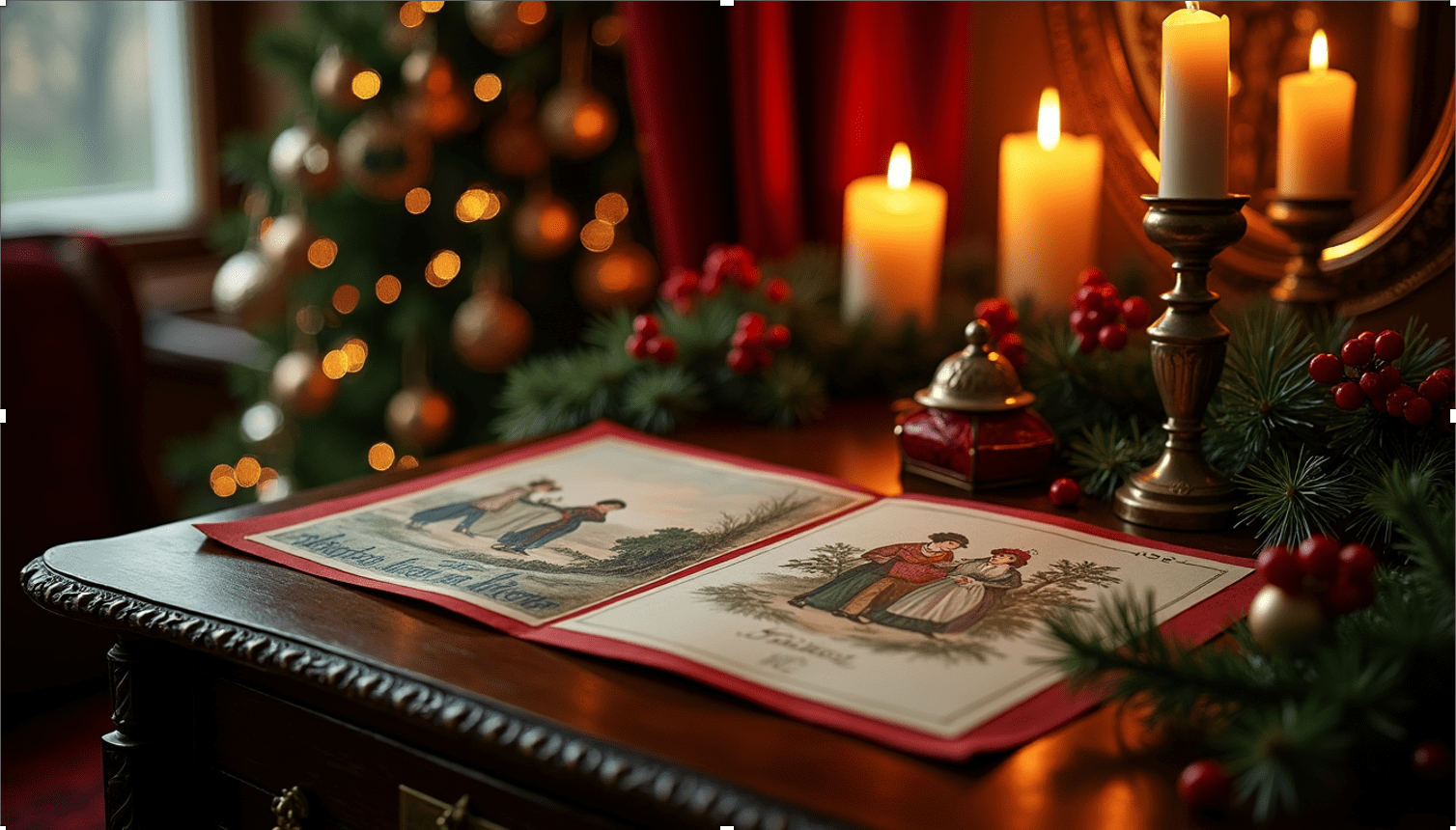
The Christmas card is a staple of the festive season, embodying warmth, goodwill, and the joy of connection. While its global popularity is undisputed, the origins of the Christmas card lie squarely in Britain, born during the reign of Queen Victoria—a time when many of the traditions we now associate with Christmas began to flourish.
A Victorian Beginning
The first Christmas card came to life in 1843, an era of innovation and cultural refinement. Sir Henry Cole, a British civil servant and visionary, played a pivotal role in its creation. Aided by his work modernising the postal service, including the introduction of the “Penny Post,” Cole sought to encourage people to use the affordable new system. His solution? A specially designed card to send festive greetings.
Cole turned to his friend, John Callcott Horsley, a respected artist, to bring the concept to life. Horsley’s design depicted a family gathered joyously around a table, flanked by scenes of charity. The card’s central message read: “A Merry Christmas and a Happy New Year to You.”
However, not everyone was pleased. The depiction of children sipping wine alongside their elders was deemed controversial by some in the conservative circles of Victorian society. Despite this, the idea gained traction and became a symbol of modern Christmas celebrations.
The Victorian Christmas Boom
Queen Victoria and Prince Albert were instrumental in shaping many aspects of the British Christmas, popularising traditions such as Christmas trees and festive feasts. The period’s spirit of innovation and growing emphasis on family and charity created the perfect backdrop for the Christmas card to flourish.
By the 1860s, advances in printing technology meant cards could be produced more affordably, and businesses began to capitalise on the trend. Designs varied widely, featuring everything from snow-covered villages to images of robins, holly, and religious scenes. By the late 19th century, sending cards became a widespread tradition, not just among the upper classes but throughout society.
Exporting the Tradition
It wasn’t long before the Christmas card made its way across the Atlantic to America. British-born printer Louis Prang is credited with popularising the custom there in the 1870s, introducing intricate, colourful designs that captivated American audiences. Yet, the Christmas card remained distinctly British at heart, reflecting Victorian values of sentimentality, family, and generosity.
Adapting to the Times
As the decades rolled on, the Christmas card adapted to reflect the changing times. The advent of photography in the early 20th century saw the rise of personalised photo cards, allowing families to share images alongside festive greetings. By the mid-20th century, big-name companies like Hallmark—and indeed, British firms such as W.H. Smith—helped define the style of modern Christmas cards with their cheerful and nostalgic imagery.
In the digital age, e-cards and online greetings have added new dimensions to the tradition, but the tactile charm of a physical Christmas card remains unparalleled.
Why Christmas Cards Endure
The Christmas card, born of Victorian ingenuity, endures as a treasured symbol of the season. It carries a timeless message of care and connection, reminding us that even in a fast-paced world, taking the time to send or receive a thoughtful greeting holds immense value.
A Lasting Legacy
As we exchange cards this Christmas, traditional, funny or otherwise, we’re continuing a tradition deeply rooted in British history, one that Queen Victoria herself would have likely admired. Whether it’s a charming depiction of a snow-dusted landscape, a heartfelt family photo, or a witty modern design, the Christmas card remains a quintessential way to spread festive cheer and goodwill.
So, as the season approaches, CREW would like to take this moment to wish you all a Merry Christmas and Happy New Year…card in the post!